
-
About Us
Why Choose Us?We specialize in holiday decorations that bring celebrations to life. Our core collection features carefully curated products for major holidays, from the sparkling magic of Christmas and the playful spookiness of Halloween to the cheerful freshness of Easter.
 Coming From China, Marketing To The World.
 -
Products
-
News
 Authentic Reliable Quality Naturally Stands Out
Yangzhou Shuangyang Crafts Co., Ltd. is a professional enterprise specializing in the research and development, production, and overseas export of holiday decoration products. Our company was official...
 English
 русский
 Español
News
Search
Categories
Product Categories
Recommend
Categories
 Company News
Product Categories
Recommend
-
Company News
-
 Company News
 -
 Company News
Apr 20, 2026 - By admin
The Aesthetic of Transparency and Light
Why Are Christmas Glass Trees Becoming the Hottest Trend for Minimalist Holiday Decor?
Content
The Aesthetic of Transparency and Light
The primary reason for the meteoric rise of the Christmas glass tree lies in its unique, almost ethereal relationship with light. Unlike a traditional pine tree, which is a solid mass that absorbs light and occupies significant “visual volume,” a glass tree interacts with its environment through complex refraction and reflection. For a minimalist, the goal is to create a festive atmosphere that feels “airy” and integrated rather than forced or overwhelming.
Light Refraction as an Active Decor Element
A high-quality Christmas glass tree acts as a functional prism. Whether crafted from lead crystal, borosilicate, or hand-blown soda-lime glass, the material catches ambient light and scatters it across the room in a dance of shadows and highlights. This creates a “natural sparkle” that evolves throughout the day—from the sharp, prismatic glints of morning sunlight to the soft, warm amber glow of evening candlelight. In minimalist decor, where color palettes are often restricted to monochrome whites, cool greys, and natural wood tones, the transparency of glass allows the holiday spirit to exist as an extension of the room’s existing light profile.
Reducing Visual Weight in Modern Living
Minimalism is fundamentally defined by the concept of “breathing room.” A traditional 7-foot tree can make a standard-sized living room feel cramped and cluttered. In contrast, glass trees are often designed as sleek tabletop centerpieces or mantle accents. Their transparent nature provides what designers call “low visual weight”—you can essentially see through the object to the architecture of the room beyond it. This allows the holiday theme to whisper its presence rather than shout, making it the perfect solution for modern urban apartments or open-concept homes where maintaining a sense of space is a priority.
Sustainability and the “Less is More” Philosophy
As environmental consciousness becomes a core value for 21st-century consumers, the “disposable” nature of the holidays is being heavily scrutinized. Every year, millions of real trees are cut down, and millions of cheap PVC-based artificial trees are sent to landfills after losing their needles. The Christmas glass tree offers a sustainable, “buy-it-once” alternative that perfectly aligns with the minimalist’s dedication to quality over quantity.
The Durability of Heirloom Quality Glass
A well-crafted glass tree is not a seasonal consumable; it is a decorative heirloom. Unlike synthetic trees that degrade, discolor, or simply go out of style, glass is a timeless medium that has been used in luxury decor for centuries. The minimalism trend encourages people to invest in one or two high-quality, artisan pieces rather than a garage full of low-cost, plastic decorations. A hand-blown glass tree from a renowned studio is essentially a work of art that retains its aesthetic value and structural integrity for decades, effectively breaking the cycle of holiday waste.
Efficiency and Clutter-Free Maintenance
Beyond the environmental impact, there is the “mental sustainability” of a clutter-free lifestyle. One of the most significant pain points of the holiday season is the labor-intensive cleanup. Real trees require constant watering and leave a trail of dried needles and sap that can damage flooring, while artificial trees require hours of assembly, branch “fluffing,” and eventually, frustrating disassembly. The minimalist appreciates the extreme efficiency of the glass tree: it requires no assembly, produces no mess, and can be wiped clean with a simple microfiber cloth. When the season ends, a single glass tree takes up minimal storage space, satisfying the minimalist’s desire for an organized home year-round.
Technical Comparison: Glass Types in Modern Holiday Decor
When selecting a Christmas glass tree for a minimalist setup, the technical properties of the glass significantly impact the final visual effect. The table below compares the most popular styles currently dominating the 2026 market.
| Glass Category | Visual Signature | Light Interaction | Durability Level |
|---|---|---|---|
| Mercury Glass | Antique, mirrored sheen | Reflective (high shimmer) | Moderate |
| Borosilicate | Laboratory-clean, ultra-clear | Refractive (crisp light) | Very High (Thermal resistant) |
| Frosted/Etched | Soft, snowy, matte glow | Diffused (soft light) | High |
| Solid Crystal | High brilliance, rainbow glints | Prismatic (rainbows) | Heavy/Fragile |
Versatility Across Modern Design Sub-Genres
While “Minimalist” is the overarching trend, Christmas glass trees are surprisingly adaptive, fitting seamlessly into several sub-genres of modern design that are trending this year. The material’s ability to take on different textures—from ribbed and bubbled to perfectly smooth—allows it to transcend a single “look.”
In Nordic-inspired decor, which prioritizes cozy functionality, glass trees are often paired with raw, warm materials like light oak, grey wool, and unbleached linen. The inherent “coldness” of the glass creates a beautiful, sophisticated contrast with the warmth of these textiles. By placing a small battery-operated tea light behind a frosted glass tree, designers create a “glow from within” effect that embodies the cozy feeling of Hygge without resorting to traditional red-and-green kitsch.
Industrial and Mid-Century Modern Sophistication
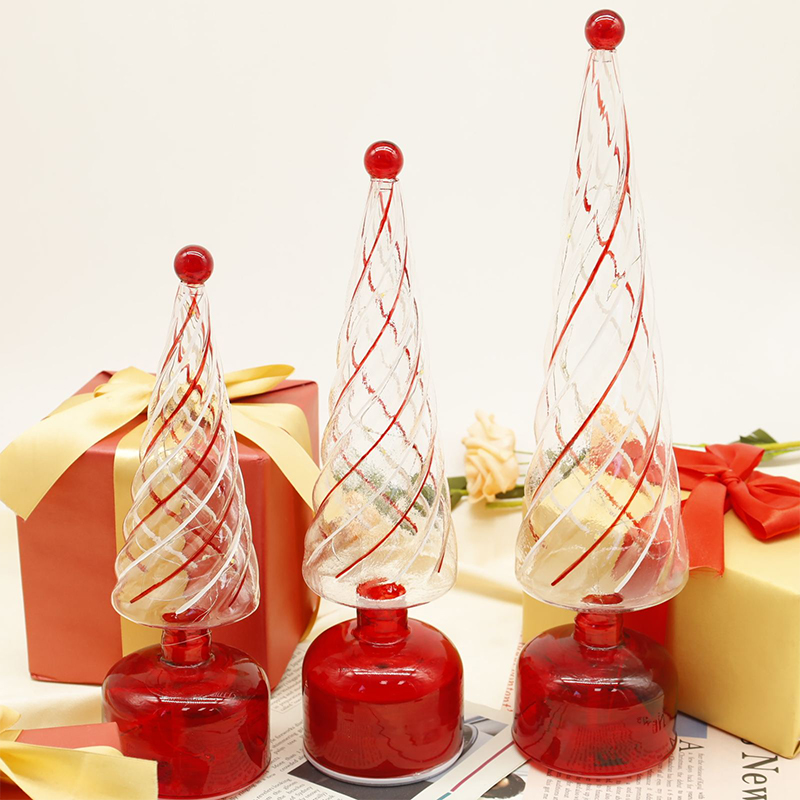
For those living in industrial lofts or homes furnished with mid-century modern pieces, the geometric, sculptural shapes of modern glass trees are a perfect stylistic match. Many contemporary designers are moving away from literal tree shapes in favor of tapered cones, abstract spirals, or stepped pyramids. These forms act as sophisticated art pieces during the daylight hours and festive symbols at night, maintaining the integrity of a carefully curated home aesthetic that values form as much as function.
FAQ: Frequently Asked Questions
Q: Are Christmas glass trees safe for households with pets or children?
A: While glass is inherently breakable, many modern versions are made from thick borosilicate or tempered glass, which is significantly more resilient than traditional thin-glass ornaments. However, we recommend placing them on stable, elevated surfaces like mantles or floating shelves out of the direct path of high activity.
Q: How do I clean my glass tree without leaving streaks?
A: The best method is to use a mixture of distilled water and a drop of mild dish soap applied with a high-quality microfiber cloth. Avoid ammonia-based glass cleaners on mercury glass, as they can strip away the delicate internal silvering.
Q: Can I leave a glass tree out all year?
A: Many minimalist designs are intentionally abstract. A clear or “smoke” colored glass cone can easily transition into a year-round sculptural art piece, especially when styled alongside books or other non-seasonal ceramics.
References & Technical Literature
- The Evolution of Holiday Aesthetics: From Maximalism to Glass, Journal of Contemporary Interior Design (2025).
- Prismatic Effects: Light Refraction and Human Psychology in Domestic Spaces, Architectural Lighting Review.
- The Sustainability of Heirloom Materials in Seasonal Retail, Global Design Trends Report.
You may also like…
-
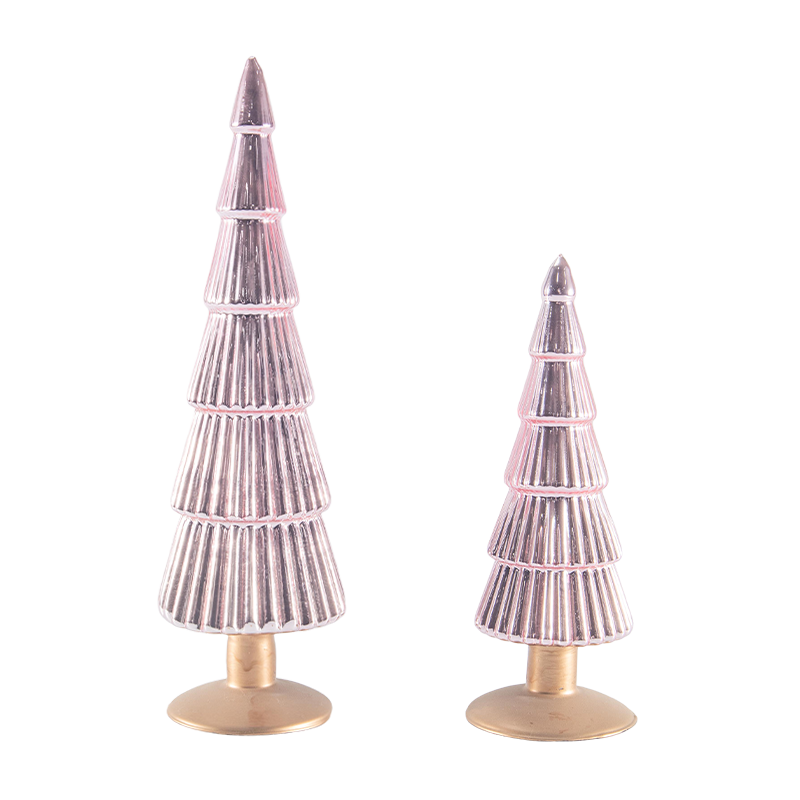 Other material decorations 8×20 & 8×25cm Striped Christmas Glass Tree 2-Piece Set Tabletop Holiday Decor View More
 -
-
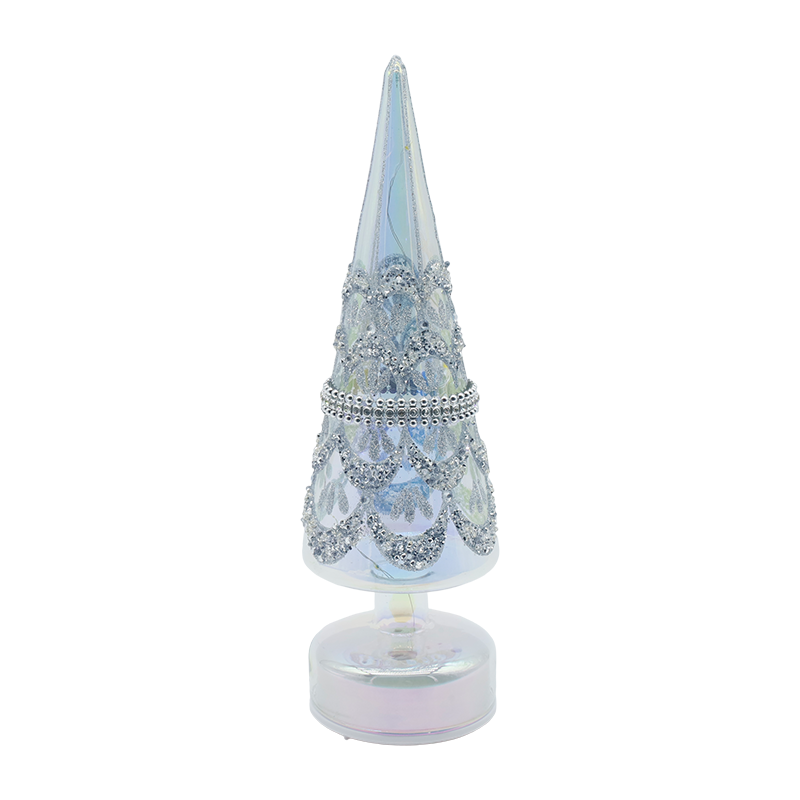 Christmas Glass tree with led light 10×30cm Rotating Christmas Glass Tree with LED Lights Iridescent Festive Decor View More
 -
-
-
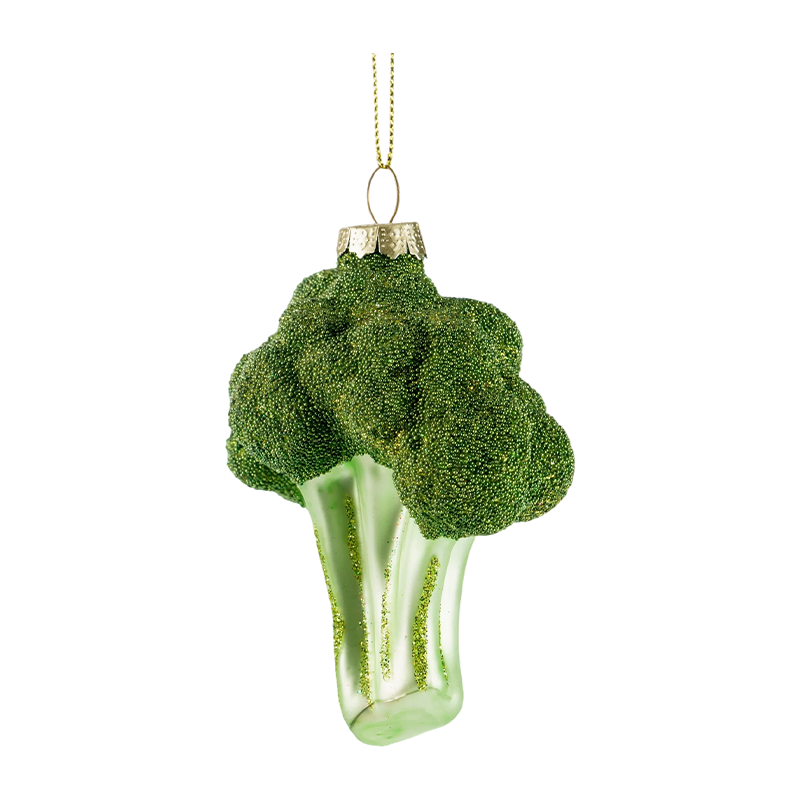 Christmas glass ornament Christmas Glass Ornament Broccoli / Candy Cane / Globe with Deer Shape View More
News
-
Yangzhou Shuangyang Crafts Co., Ltd. is a professional enterprise specializing in the research and d...
READ MORE -
Yangzhou Shuangyang Crafts Co., Ltd. is a professional enterprise specializing in the research and d...
READ MORE -
Yangzhou Shuangyang Crafts Co., Ltd. is a professional enterprise specializing in the research and d...
READ MORE -
Yangzhou Shuangyang Crafts Co., Ltd. is a professional enterprise specializing in the research and d...
READ MORE -
Yangzhou Shuangyang Crafts Co., Ltd. is a professional enterprise specializing in the research and d...
READ MORE -
Yangzhou Shuangyang Crafts Co., Ltd. is a professional enterprise specializing in the research and d...
READ MORE

Copyright © Yangzhou Shuangyang Crafts Co., Ltd. All Rights Reserved.
